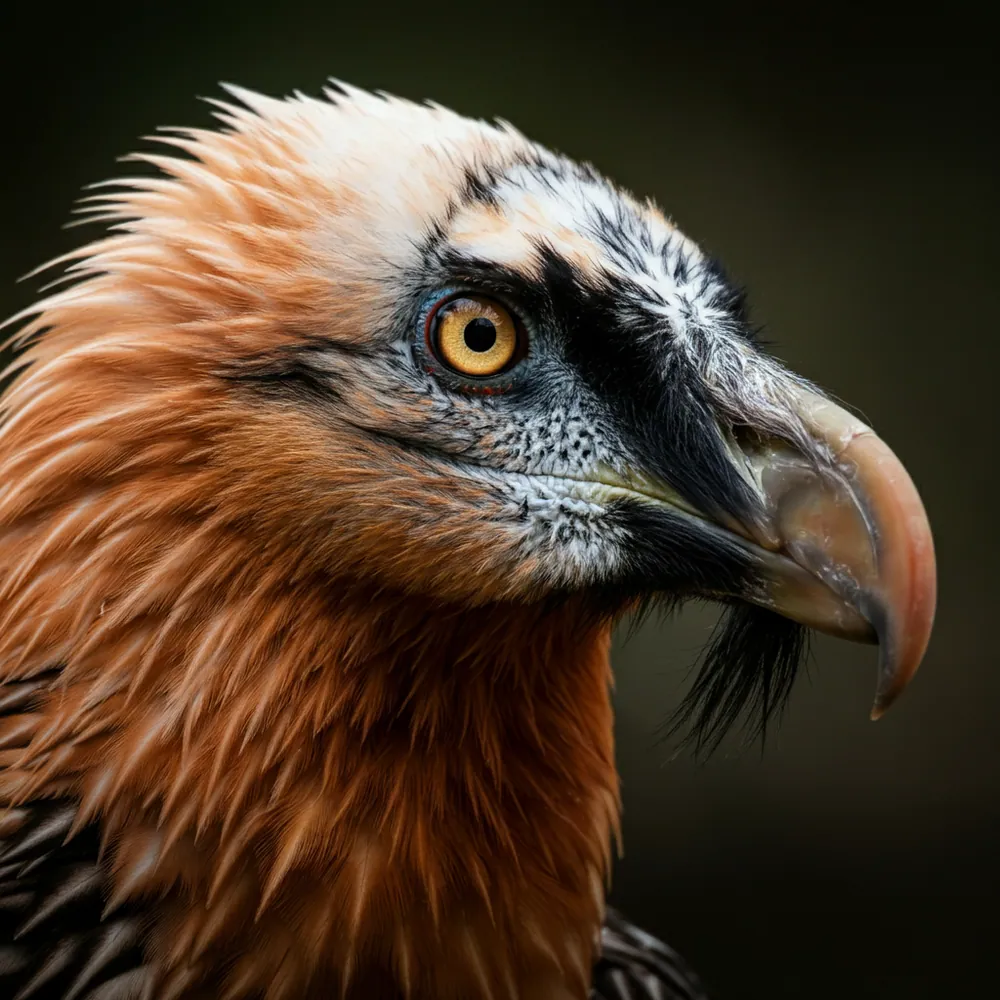
Get ready to meet one of the coolest birds in the sky, the magnificent Bearded Vulture! You might also hear it called the Lammergeier, and it truly lives up to its majestic name. Just look for the awesome "beard"—a tuft of dark bristles right under its powerful beak, making it look super wise and ancient! These incredible birds have a wingspan that can stretch almost 10 feet wide, letting them glide effortlessly high above the mountains. With rusty-orange feathers (sometimes from iron-rich dust!) and piercing pale eyes, they're a breathtaking sight against the blue sky!
But wait, there's more! What makes the Bearded Vulture truly extraordinary isn't just how it looks, but what it eats! Unlike other vultures that munch on meat, these guys are nature's ultimate bone specialists. Imagine this: they find a big animal bone, scoop it up with their mighty talons, and soar way, way up into the sky. Then, with incredible aim, they drop it onto a specific rock! *CRACK!* The bone shatters, and our clever vulture swoops down to feast on the yummy, nutrient-rich marrow inside. How smart is that?!
This amazing bone-eating superpower isn't just cool; it's super important for the mountains! Bearded Vultures are like the ultimate clean-up crew. By gobbling up every last bit of bone, they help recycle nutrients, prevent diseases from spreading, and keep their high-altitude homes squeaky clean for other animals. They do a job no other creature can, making them true heroes of the ecosystem and a powerful reminder of how clever and balanced nature can be!
Where the bearded vulture still lives — Ethiopia, Spain, France, Nepal, China, India
Bearded vultures love to eat old bones, but sometimes these bones come from animals that have been poisoned by bad chemicals or even lead from hunters' bullets. When the vultures eat these poisoned bones, they get very sick and can even die.
Being done about itScientists and park rangers are working hard to stop illegal poisoning and teach people why it's so harmful. They also encourage hunters to use safer bullets that don't leave dangerous lead behind for the vultures to eat.
Habitat loss
Bearded vultures need huge, quiet mountains with tall cliffs to build their nests and lots of open land to find food. But sometimes, people build new roads, houses, or even wind farms in these special places, which means less safe space for the vultures to live and hunt.
Being done about itConservation groups are working to protect these important mountain areas, making sure they stay wild and safe for the vultures. They also help create special protected zones where building is not allowed, so the vultures can nest and raise their chicks in peace.
But don't worry, lots of awesome people are on a special mission to help them! Scientists and wildlife heroes are carefully raising baby Bearded Vultures in safe places and then releasing them into big mountains like the Alps, hoping they'll grow up and have their own vulture families.