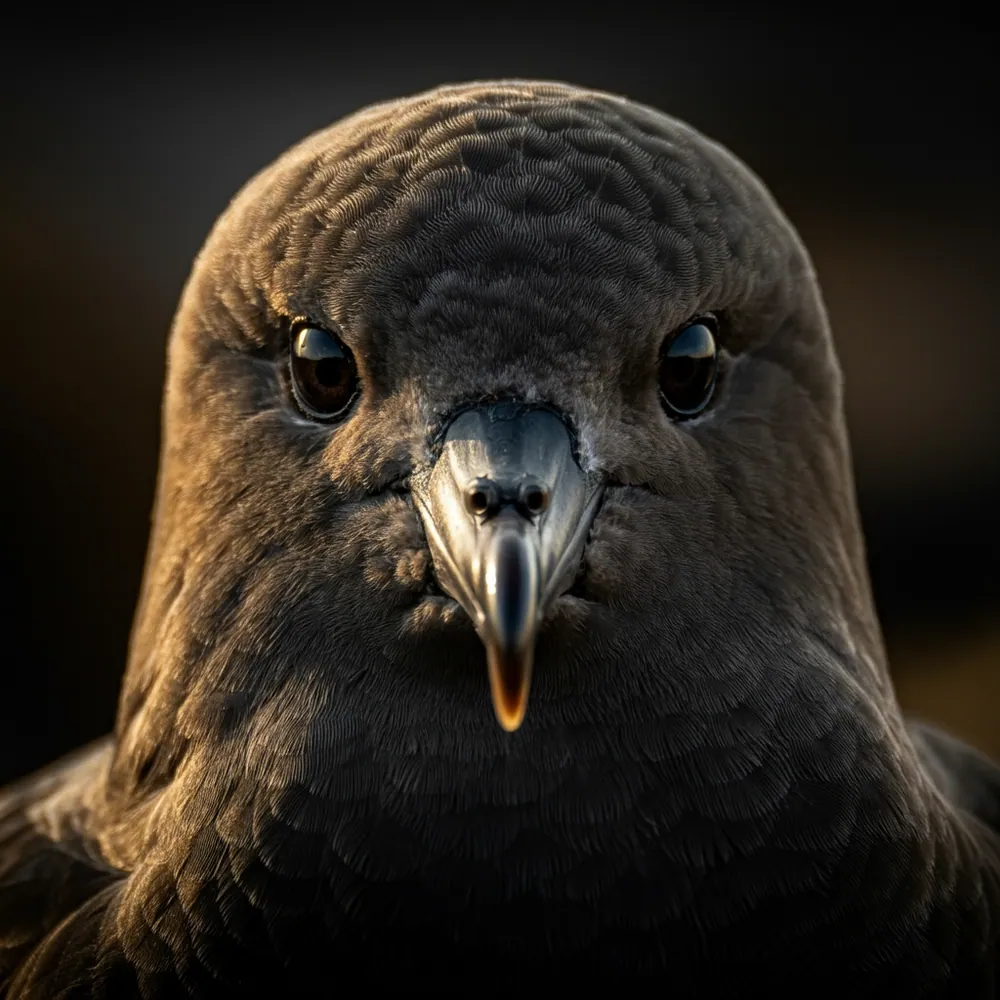
Get ready to meet one of the ocean's most mysterious and amazing flyers – the Ashy Storm-petrel! Imagine a tiny bird, no bigger than your hand, with feathers the color of a smoky evening sky. This little adventurer spends almost its entire life soaring over the vast, open ocean, dancing through the air like a shadowy ninja. It's a true master of flight, built perfectly for endless journeys across the waves, making it a spectacular sight if you're lucky enough to spot one!
But here's where it gets even cooler! While you're fast asleep, the Ashy Storm-petrel comes alive, darting and swooping under the moonlight. It flies so close to the water, it almost looks like a dizzy butterfly! And get this – it can actually *walk on water*! Using its webbed feet, it skips and dabbles along the surface, picking up tiny snacks. When it's time to build a nest, these secret birds find hidden cracks and caves on remote islands, whispering soft, purring calls to each other in the dark.
Even though it's tiny, the Ashy Storm-petrel plays a super important role in our world. Think of it like a tiny ocean detective! Because it's so sensitive to changes, if Ashy Storm-petrels aren't doing well, it's a big clue that something might be wrong with the ocean – like pollution or warming waters. So, by protecting these amazing little sky-dancers, we're helping to keep our whole blue planet healthy for everyone, from the smallest fish to us!
Where the ashy storm-petrel still lives — United States, Mexico
Ashy Storm-petrels live on the ocean, and sometimes they eat tiny pieces of plastic that look like food, which can make them sick. Oil spills can also cover their feathers, making it hard for them to fly or stay warm.
Being done about itScientists and volunteers work hard to clean up beaches and oceans, picking up plastic and trash. Many people are also trying to use less plastic and recycle more to keep our oceans clean for these birds.
Climate change
As our planet gets warmer, ocean temperatures change, which can make it harder for Ashy Storm-petrels to find their favorite tiny fish and squid to eat. Rising sea levels can also flood the small islands where they build their nests.
Being done about itScientists are studying how climate change affects their food and homes, helping us understand how to protect them. People are also working to reduce pollution that causes the planet to warm, like using less electricity.
Invasive species
Ashy Storm-petrels build their nests on quiet islands, but sometimes sneaky animals like rats or cats, which don't naturally live there, arrive and can eat their eggs or baby chicks. These new predators are a big danger to the young birds.
Being done about itConservationists and park rangers work carefully to remove these harmful animals from the nesting islands. This helps make the islands safe havens again for the storm-petrels to raise their families.
Superheroes for Ashy Storm-petrels are working hard to protect their island homes from sneaky predators like rats and cats, making sure their nests are safe and sound! Scientists are also learning all they can about these mysterious birds to help them thrive, because every single storm-petrel is important!